- Products
- Industrial Combustion Products
- Zeeco
- Flare Systems
- Vapor Control
What Is a Flare Gas Recovery Unit?
A flare gas recovery unit (FGRU) is a system that captures flare gases and redirects them back into production workflows for reuse as fuel gas. This process helps to reduce routine flaring and emissions while saving operators on long-term production costs.
How Does a Zeeco Flare Gas Recovery Unit Work?
The flare gas recovery process consists of several steps. To begin, gases are redirected from the flare header to the FGRU. Gases pass through a compressor or an ejector and then go to a separator to remove any liquids. The gases then leave the separator, are cooled, and proceed to a knockout drum to remove any condensates before being returned to the plant or facility for reuse. If, at any point, an upset occurs that requires a flaring event, the flare gas recovery process is stopped so that waste gases can be safely destroyed by the facility's flare.
Typical FGR Sizing:
-
Flowrate Ranges: 0.1 to 10MM SCFD (11,100 Nm3/hr)
-
Pressure Ranges: 35 to 300 psig (20.7 barg)
Advantages of Ejectors in FGRU Systems
In certain situations, ejectors may offer distinct advantages over traditional compression technologies. They have no moving parts in the compression zone and can handle a wide range of process conditions. Ejectors may also offer improved reliability, reduced maintenance requirements, and substantial cost savings.
The operation is based on Bernoulli’s principle. In an ejector, the velocity of the motive fluid increases as it passes through the nozzle, creating a low-pressure region within the ejector suction chamber. This action creates a suction, and low-pressure flare gas/vapor is entrained. As the combined high-pressure motive and flare gas or low-pressure gas streams pass through the ejector’s diffuser section, the velocity decreases, and the result is the desired outlet pressure conditions. If high-pressure water or steam is used, a separator is required downstream of the ejector to separate gas from water. If high-pressure gas is used, no downstream separator is needed.
Why Should You Choose Zeeco for Your FGRU Project?
As the industry leader in advanced combustion technologies and environmental solutions, Zeeco has an intricate understanding of flare systems and their ancillary equipment. When you order an FGRU from Zeeco, you're not working with a team that just installs the system but rather a team that ensures your FGRU and ancillary equipment are designed for your specific process conditions so that you get the most out of your new equipment.
Services Offered:
-
Engineering Studies – let us help you determine if a FGR system is right for your facility. Our engineers will recommend system sizing, compressor technology, and ancillary equipment. They will develop the cost estimate and evaluate the payback period to help you decide the economic feasibility.
-
Engineering, design, fabrication, supply, installation, and startup of FGR packages.
-
Field support after equipment startup.
What Is a Vapor Recovery Unit?
A vapor recovery unit (VRU) is a system designed to recover fugitive emissions at truck, marine, or rail car loading terminals and storage tank facilities. Fugitive emissions occur at these facilities when storage tanks need to relieve pressure and during the loading process. Prior to the introduction of VRUs, these fugitive emissions were either vented to the atmosphere, flared, or sent to a vapor combustor. Now, VRUs give operators the ability to recover those fugitive emissions by redirecting vapors for recovery and reuse.
How Does a Zeeco Activated Carbon VRU Work?
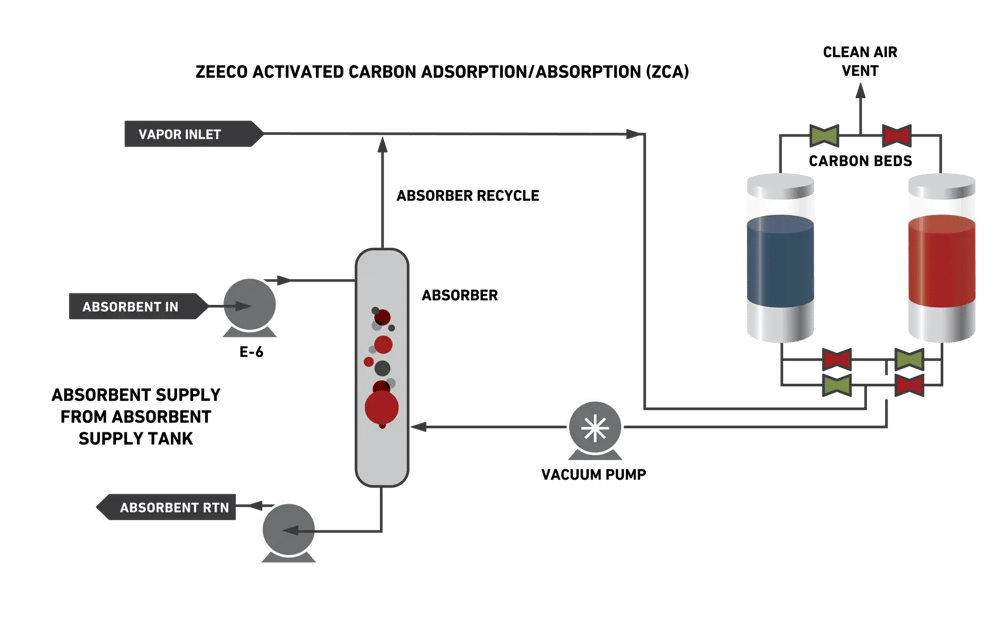
ZEECO VRUs use the highly versatile and efficient process of adsorbing hydrocarbons onto activated carbon. This well-known technology is widely accepted as the Best Available Technology (BAT) in a wide range of applications, with a turndown capability of 0 to 100% of flow and inlet hydrocarbon concentrations.
The adsorbed hydrocarbons are recovered from the activated carbon through the use of a vacuum pump system and re-absorbed into a circulated stream of absorbent, returning the hydrocarbons back to the loading operation or storage facility. Either liquid ring, dry, or sliding vane vacuum pump types can be used.
ZEECO VRUs can achieve recovery rates of up to 99% and about 1 to 2 liters of product per 1,000 liters loaded. In many applications, return on investment occurs within a few short years.
A Range of Systems to Meet Any Application
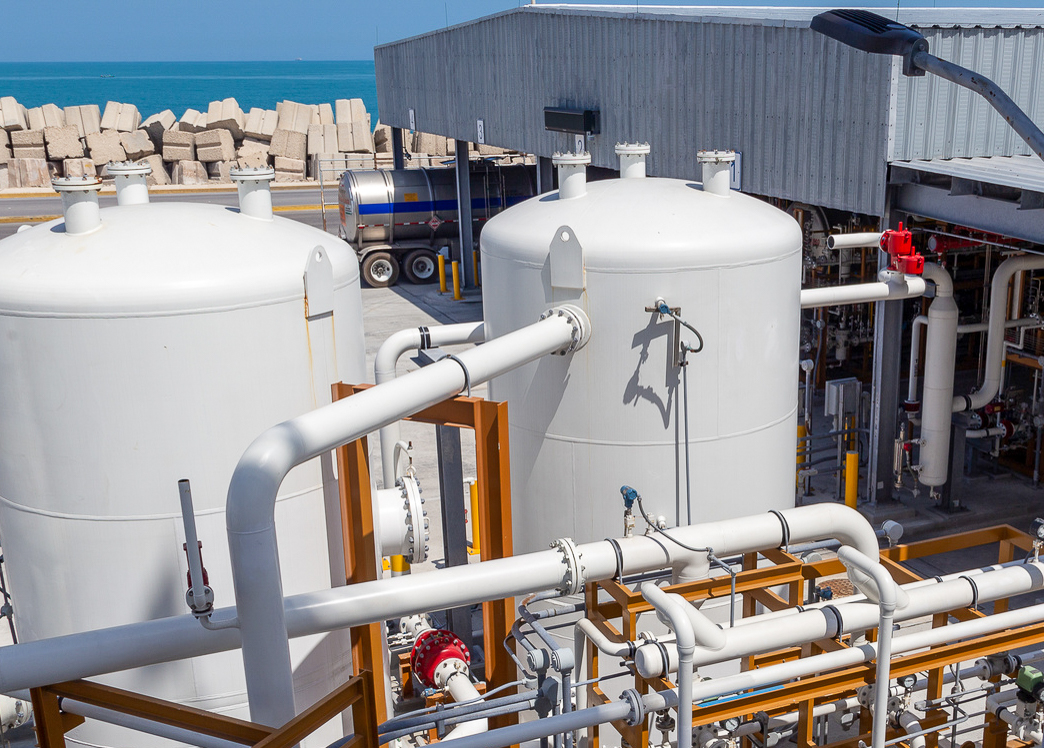
Zeeco offers a range of vapor recovery systems based on varying vapor inlet capacities to fit specific applications, from the smallest truck-loading terminals to the largest marine-loading operations. Our flexible approach to client requirements and engineering standards enables us to offer customized systems for applications both large and small. Zeeco’s vapor recovery systems also meet the strictest emission compliance requirements around the world. From the lowest flow rates found in single truck-loading applications to the largest ship-loading operations, Zeeco designs vapor recovery systems that control emissions from 35 mg/L down to 1 mg/L.
Vapor Combustor Unit (VCU)
Destroy emissions for cleaner operations
What Is a Vapor Combustor Unit?
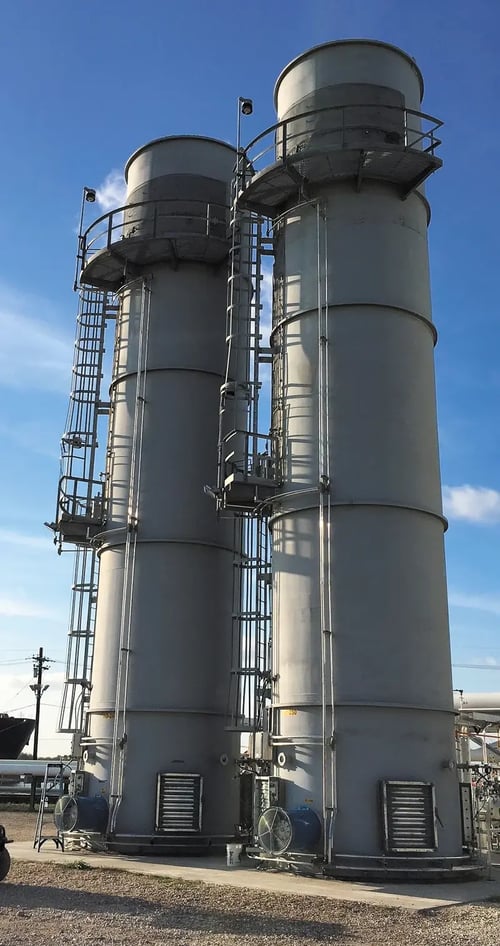
A Vapor Combustor Unit (VCU) is primarily used for the control and destruction of the volatile organic compound (VOC) laden vapors generated during the loading of crude oil and refined petroleum products into trucks, railcars and marine vessels. They are also used to control the vapors generated by the venting of petroleum storage tanks.
How Does a Zeeco Vapor Combustor Unit Work?
Whether you are loading trucks, rail cars, or marine vessels, a reliable, economical vapor control system is vital to your day-to-day operation. Zeeco’s advanced Vapor Combustor Units (VCU) are fully enclosed, have automated temperature control, and are designed to be the most reliable, cost-effective means to achieving Volatile Organic Compound (VOC) Destruction Efficiencies (DRE) up to 99.9%. These high-efficiency vapor combustors can operate on a wide range of vapors without smoke or visible flames. Units can be sized to fit the smallest truck rack to the largest marine loading systems. Flow rates up to 80,000 BPH or higher by combining multiple VCUs in parallel.
Features:
-
Destruction efficiencies up to 99.9%
-
USCG Certified Anti-Flashback Burners.
-
Dedicated, Variable Frequency Driven (VFD), air-assist fans deliver combustion air directly to each burner pack.
-
Burner packs can be staged to meet a wide range of operating requirements.
-
Automated dampers for more precise control of combustion air, which allows tuning of the VCU for optimal emission performance.
-
Designed for minimum pressure drop in order to ensure backpressure on truck rack is less than 18” W.C.
-
High turndown capability.
-
Smokeless performance from 0% to 100% operation.
-
Detonation arrestors on the vapor inlet line to prevent flashbacks into terminal piping.
-
Operation can be tied to loading operations to turn system on and off as needed.
-
PLC based control system with HMI for fully automatic flame ignition and monitoring
Standard emissions
-
-
-
- VOC DRE: 98% up to 99.9%
-
- NOx: 0.12 to 0.2 lbs./MMBTU
-
- CO: 0.1 to 0.5 lbs./MMBTU
-
-
BioGas & RNG Solutions
Methane emissions control
Industry-leading Combustion Solutions
As the requirements to lower methane emissions from biogas facilities tighten, operators of anaerobic digesters, landfills, and renewable natural gas (RNG) purification facilities face increasing pressure to meet strict environmental regulations while maintaining safe, reliable operations. Zeeco provides advanced combustion-based emissions control technologies engineered specifically for the unique challenges of these industries. Whether you need to destroy raw biogas or the off-specification gas from a biogas purification unit, Zeeco delivers proven solutions for safe, reliable, and efficient control of your methane emissions.
Safely Control Methane Emissions for Landfills and Anaerobic Digesters
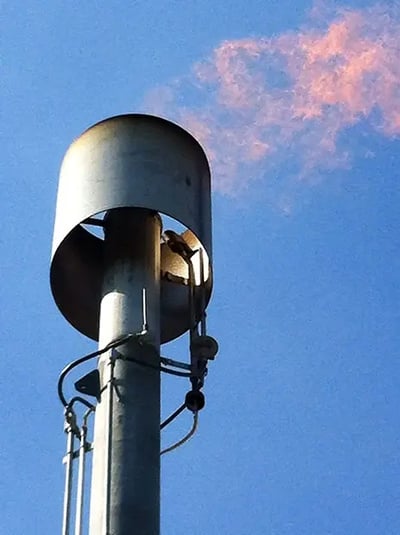
Zeeco's open and enclosed biogas flares are the ideal solutions for controlling methane and other volatile organic compound (VOC) emissions from biogas operations. They are designed to handle variations in flow rate and gas composition and can handle gas streams containing high concentrations of carbon dioxide (CO2).
Biogas & Landfill Flares
Whether the source of biogas is a landfill or an anaerobic digester, the methane vapors generated from these processes cannot be released to the atmosphere and must be controlled. This is why a robust and reliable biogas flare is so critical. Even if the biogas is being used in a beneficial way, such as generating power via an internal combustion engine or purifying it for use as fuel or for pipeline sales, these systems need to be backed up by either an open or an enclosed flare. While high concentration of CO2 in biogas makes burning it a challenge, Zeeco’s flares are designed to overcome this challenge and ensure stable combustion to achieve high methane destruction removal efficiencies (DRE).
Key Features of and Benefits of Open Flares:
-
Turndown ratio of 10:1 or greater
-
Pilots with retractable thermocouple and ignition prober standard
-
≥ 98% DRE
-
Designed to handle raw biogas and off-specification RNG
-
Standard designs available: reliable, repeatable performance, and shorter leader times
-
Lower capital cost option
-
Rental systems available for short or long-term needs
Key Features and Benefits of Enclosed Flare
-
No visible flame
-
No thermal radiation outside the unit
-
Low noise
-
Turndown ratio of 5:1 or greater
-
Temperature control and minimum stack temperature capability, if required by air permit
-
≥ 98% DRE
-
Designed to handle raw biogas and off-specification RNG
-
Standard designs available: reliable, repeatable performance, and shorter lead times
-
Rental systems available for short or long-term needs
Safely Destroy Waste Gases from Renewable Natural Gas Operations
Zeeco’s flares and vapor combustor units (VCU) play a critical role in RNG operations by controlling methane emissions from every phase of the RNG purification process. This helps facilities meet their strict environmental regulations and maintain safe, efficient performance.
Renewable Natural Gas Flares
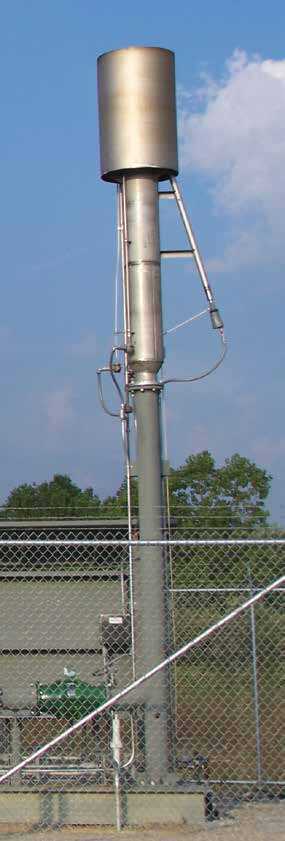
Flares play an important role in RNG purification operations, ensuring methane emissions are controlled at every phase of the operation. They handle the raw biogas when the purification plant goes down for scheduled or unscheduled maintenance and control the off-specification RNG generated during the purification plant's initial start-up. Zeeco designs flares specifically for the variable flow rates and methane concentrations typical of RNG facilities, ensuring high DRE and regulatory compliance, even under the most challenging conditions.
Key Features and Benefits of Natural Gas Flares:
-
Turndown ratio of 10:1 or greater
-
Pilots with retractable thermocouple and ignition probe standard
-
≥ 98% DRE
-
Designed to handle raw biogas and off-specification RNG
-
Standard designs available: reliable, repeatable performance, and shorter lead times
-
Lower capital cost solution
- Rental systems are available for short or long-term needs
Renewable Natural Gas Vapor Combustor Units
During the RNG purification process, CO2 is separated from the methane to achieve pipeline quality. This stream of CO2 is called tail gas. Depending on the purification technology, some methane is removed with the CO2. Based on the concentration of methane and the requirements of the facility’s air permit, the tail gas may need to be sent to a control device. Due to the extremely high CO2 concentrations, the tail gas is extremely difficult to burn. The most efficient and effective way to handle it is with a VCU.
Key Features and Benefits of Renewable Natural Gas VCUs:
-
≥ 99% DRE
-
Engineered for vapor compositions with high and varying CO2 concentrations.
-
Temperature control and preheat capability, to ensure minimum stack temperature, if required by air permit
-
Ceramic fiber stack insulation allows for fast heat-ups and cool-downs
-
PLC-based control system, local Human Machine Interface (HMI), and necessary instrumentation
-
Two (2) emission testing ports 90° offset.
-
Designed to meet stringent EPA and local air quality regulations
- Rental systems are available for short or long-term needs
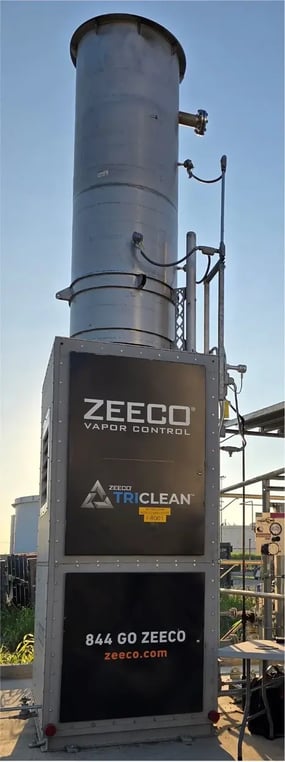
ZEECO TriClean™
If your facility is in an environmentally sensitive area where NOx emissions are tightly regulated, such as one of the EPA’s 8-hour ozone nonattainment areas, then you may need an ultra-low NOx VCU. Zeeco has developed the TriClean, an ultra-low-emission VCU that can achieve NOx emissions of ≤ 17 ppm (0.02 lbs./MMBTU) and CO emissions ≤ 27 ppm (0.02 lbs./MMBTU), corrected to 3% oxygen.
Key Features and Benefits:
-
Enclosed system
-
Turn down ratio of 6:1, higher with design modifications
-
≥ 99.99% DRE
-
Ultra-low NOx emissions of ≤ 0.02 lbs./MMBTU
-
Ultra-low CO emissions of ≤ 0.02 lbs./MMBTU.
- Designed to handle raw biogas, off-specification RNG, or tail gas from a RNG purification unit